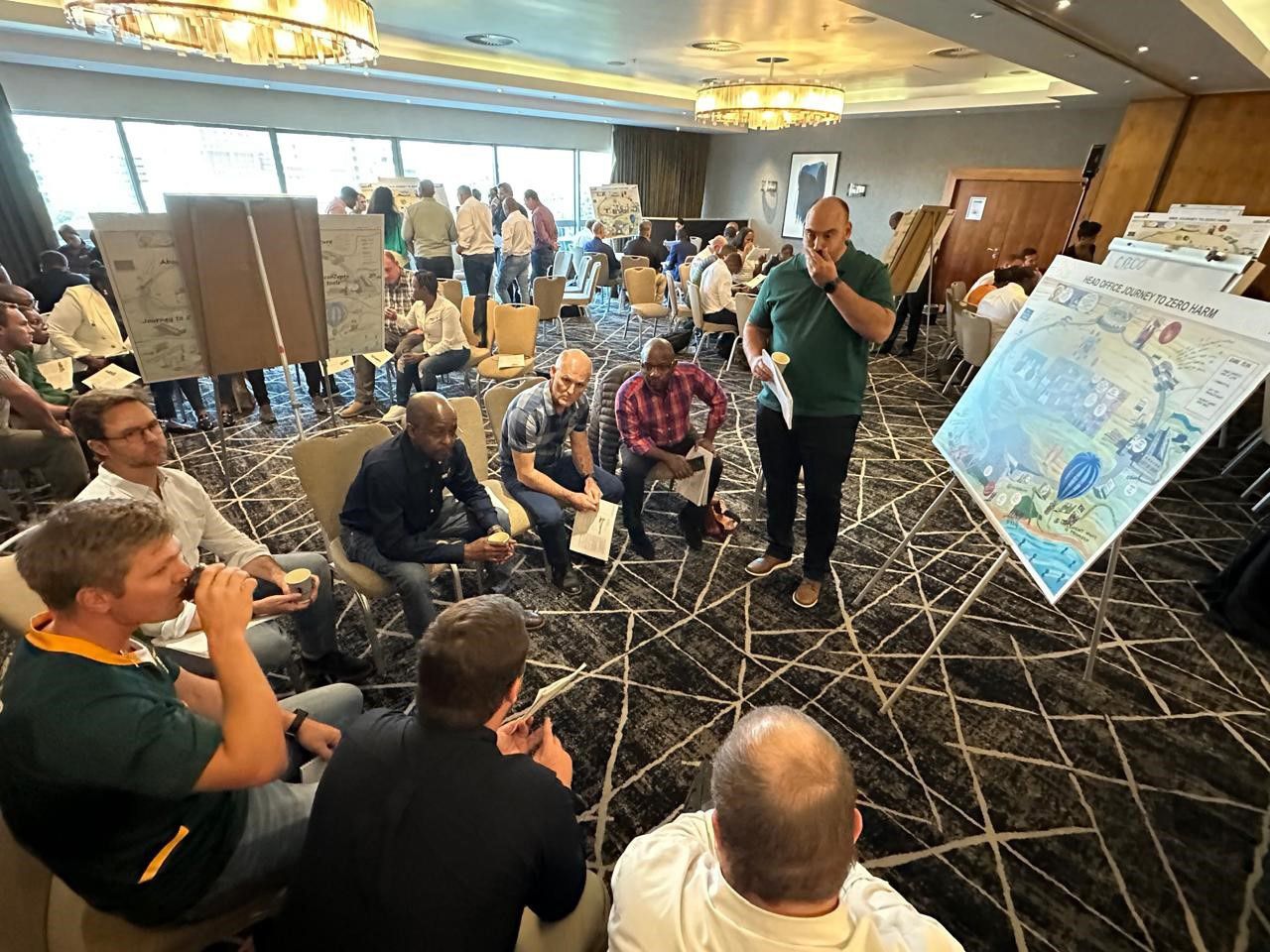
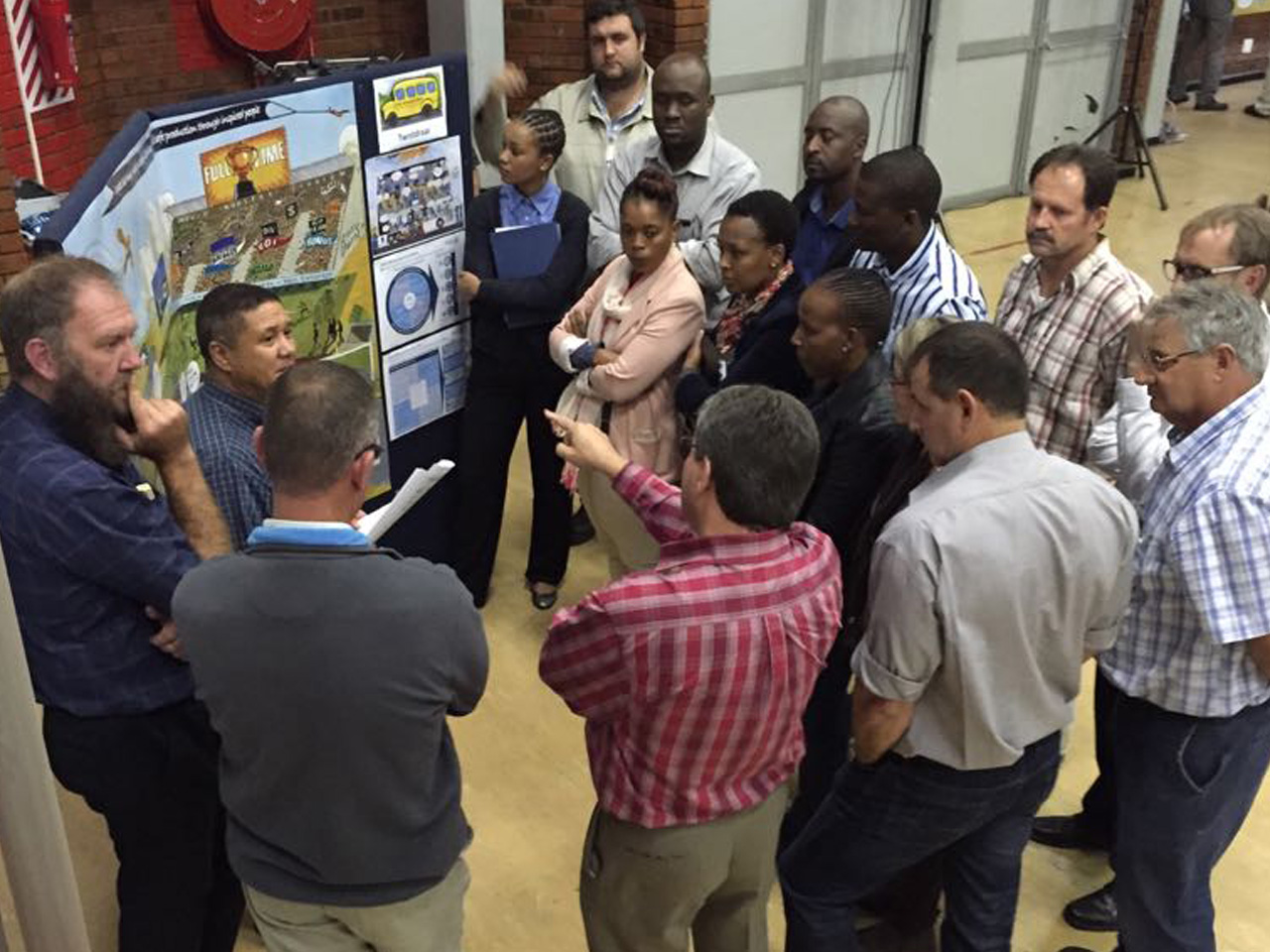
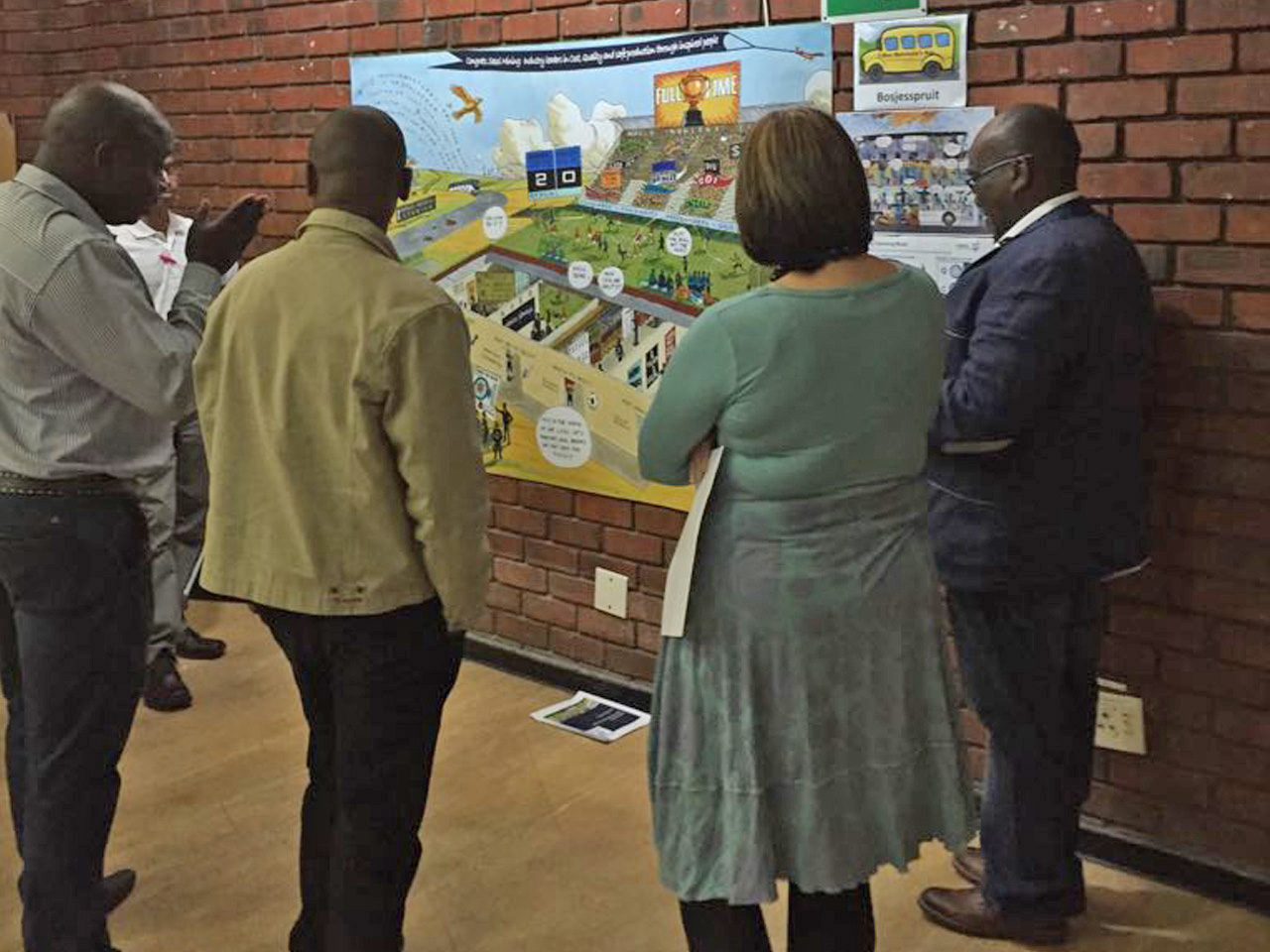
We develop and install Visual Strategy Maps which spark conversations among employees

- from the boardroom to the shop floor.

The result: employees get their heads around strategic issues.
Buy-in, implementation and business performance follow – naturally!

We develop and install Visual Strategy Maps which spark conversations among employees

- from the boardroom to the shop floor.

The result: employees get their heads around strategic issues.
Buy in, implementation and business performance follow.
(Naturally!)

Feeling frustrated by any of the following:

Productivity and performance issues?

Low morale?

Resistance to change?

You are not alone!

It’s not easy to get employees at all levels to understand and act on the business strategy.

Unless you have the right tools!

Our tried and tested approach solves this problem.

We know what it feels like to doubt if your messages are getting through.  

For more than 20 years we have worked with leaders to get their business strategy understood and owned by employees.  We have pioneered and refined a ‘strategy to story’ methodology – combining the power of visuals, storytelling and interactive discussion. 

It beats all other internal communication channels hands down!  

What is a Visual Strategy Map (VSM)?

THE VISUAL MAKES SENSE

A VSM simplifies, integrates and makes sense of ALL strategic and operational initiatives.

THE STORY IS MEMORABLE

By using a compelling analogy (in this case summitting a mountain), a VSM makes the abstract concrete and more memorable.

THE CONVERSATIONS ARE REAL TIME

A VSM is a powerful tool for leaders to conduct real time conversations about strategic and culture issues in the business.

Let's make it happen:

Connect

With us online or in-person, and describe your challenge.

Develop

THINKspiration creates a bespoke or customisable visual map to get your employees talking about the right stuff.

Install

A step-by-step process to install the visual map and capacitate leaders at every level in your company to use it for productive conversations.

See it in action:

By signing up, you agree to receive valuable content and resources. You can unsubscribe at any time.

Here’s what some of our clients have to say:

Here’s what some of our clients have to say:

Here’s what some of our clients have to say:

Some of our clients include:

Arm yourself by simply paying attention

By Timothy Webster

A listening leader is rare to come by. You may think listening comes naturally, but in the workplace, studies show very few actually do. Think for a moment—how many times have you said to your colleagues: “But you are not listening!” Or, when pressed further: “Don’t you ever listen?”

Stephen Covey, author of The 7 Habits of Highly Effective People, lamented: “Most people do not listen with the intent to understand; they listen with the intent to reply.”

I was reminded of just how valuable this skill is when reading Tracey Swanepoel’s new book, The Leadership Riptide and How to Escape. Tracey spent the formative years of her career in branding at Ogilvy & Mather. Her extraordinary leadership work within Harmony Gold Mining Company led to fascinating insights, so she decided to pen a book on corporate leadership, both internally and externally.

The Leadership Riptide unpacks leadership at the highest level. As an adviser to some of the most powerful executives in the world, she spearheaded communications and leadership campaigns that positioned Harmony to thrive at unprecedented levels.

A quarter of the way through the book, Swanepoel hits a soaring stride with the chapter “Knowing Yourself.” She advocates that one of the best ways to start knowing yourself is by listening to yourself.

“Fake listening is an epidemic, the result of us not listening to ourselves or being aware of our own voice,” she writes. “We hear multiple internal voices talking over each other, which makes the focused attention required to listen to anyone else impossible.”

She continues with what I consider one of the most memorable moments of her work:

“This means that real empathy and compassion are drowned out. Really listening to another person requires stillness of the soul, a quietness of the mind—an empty space where you can hold the other person. This kind of listening is a superpower.”

The moment I read this chapter, I was struck by how powerless most people are because they don’t listen. The superpowers Swanepoel speaks of can come only when you accumulate ammunition from another’s soul.

To shoot down doubt and confusion and position clarity, you must be able to align your messaging to what the other person or stakeholder cares about. Without the value of insight that comes from another’s deepest values—which can come only when you are truly involved as a listener—you are powerless.

Swanepoel’s background and experience read like a superwoman’s adventures, but not because she was born with special powers, but because she armed herself by paying attention. You’ll leave her book equipped with practical tools and a strategy to empower both yourself as well as your organisation’s leadership.

Life purpose

By Timothy Maurice Webster

Leadership conferences and women’s events fill our annual calendars, offering leaders the chance to acquire competitive or practical skills. Agendas are jam-packed with upskilling talks and exercises, ranging from learning to build your brand to finding a work-life balance. However, rarely will you find a workshop dedicated to listening.

Male or female, a listening leader is rare to come by. Studies show very few people, inside or outside the office, actually listen. How many times have you stood in a meeting and said: “But you’re not listening!”—then your opinions are simply side-swept? Stephen Covey, author of The 7 Habits of Highly Effective People (Free Press), lamented: “Most people don’t listen with the intent to understand; they listen with the intent to reply.”

Many confuse listening with hearing. I was reminded of just how fundamentally different the two are by Tracey Swanepoel’s book, The Leadership Riptide and How to Escape (BizNews Online Services). Swanepoel, a leadership and marketing authority, spent the formative years of her career in branding at Ogilvy & Mather. After her work within the Harmony Gold Mining Company, where she gained fascinating insights, she wrote a book about corporate leadership, both internally and externally. The Leadership Riptide goes behind the scenes, offering compelling cases and conversations from an insider’s perspective.

As a senior advisor to some of the most powerful executives in the world, Swanepoel has observed that listening is an undervalued tool that must be revisited. In the chapter titled “Knowing Yourself,” she advocates “self” as the best place to start acquiring this skill. With social media bombarding our senses and the general pace of life speeding up, we ignore ourselves more than ever before. Swanepoel implores:

“Fake listening is an epidemic, the result of us not listening to ourselves or being aware of our own voice. We hear multiple internal voices talking over each other, which makes the focused attention required to listen to anyone else impossible… This means that real empathy and compassion are drowned out. Really listening to another person requires stillness of the soul, a quietness of the mind, an empty space where you can hold the other person. This kind of listening is a superpower.”

It requires selflessness to find that empty space. Much like peak-hour traffic, space is rare when you’re peaking in your leadership journey. It’s not a weakness to make room for someone else’s issues and concerns. Most people are weak precisely because they don’t listen.

The superpowers Swanepoel alludes to can only come when you stockpile ammunition from another’s soul. If you hope to shoot down doubt and confusion in order to lead with clarity and conviction, you must align your messaging with the highest concerns of those who follow you. A leader who lacks the benefit of insight emanating from the depths of other people’s souls will find themselves extremely vulnerable and powerless.

Swanepoel’s own power comes from using the tools she shares. Listening and paying attention may not be on offer on the registration template at the next conference you attend, but it’s the one skill that will yield superwoman-like results.

For more on Swanepoel’s book, visit: www.thinkspiration.co.za

Enjoy your newfound power!

Strategy To Story

Rapport article 13 December, 2015

“We simply can’t force our employees to accept our vision and values, like we did in the past. Strategic communication needs a new game plan to ensure that everyone lives ‘happily ever after’.”

By Vida Booysen

Rapport article 13 December, 2015

Read the Rapport article…


Once upon a time, there was a management team who loved communicating with their workers by sending out ALL STAFF emails. In these they used fancy words like “vision,” “mission,” “risk management” and “strategy”.

The workers didn’t always understand what these big, fancy words were about, but they didn’t want to hurt anyone’s feelings, and anyway these terms were far removed from their daily reality. If they wanted to resolve practical problems in the workplace, they simply held brainstorms right there on the factory floor. Sometimes they would chat together in the change house– during shift changeovers – about things that they wanted to change and improve. But no one told the bosses about these discussions…that would have been a severe career-limiting move!

Then, one day, a husband and wife, two outsiders, went to have a conversation with the workers on the shop floor, so that everyone could understand each other better and could come up with a strategy for the company together.

The man (the CEO of one of the country’s mining giants for 12 years) is passionate about reinventing the corporate world as a place where people listen to each other. His wife is a creative whirlwind with a passion for writing stories. Her MBA dissertation investigated
ways in which companies could communicate as innovatively and effectively with their employees as advertisers do with consumers.

Bernard Swanepoel, former head of Harmony Gold, and his wife Tracey’s specialist consultancy THINKspiration, aims to help companies get their strategy understood, and they have a variety of big clients to their name: Sasol Mining, Cell C, Careways and of course Harmony, where “The Harmony Way” became a way of successfully engaging mineworkers in Welkom and fund managers in New York. The Swanepoels distill corporate strategy into a compelling story that speaks to the hearts of workers. “Stories are a universal language that we all speak, they are an innate part of our humanity, and they are an integral part of how we see the world,”
says Tracey. “These stories are represented visually (in picture form), for example in a cartoon or a roadmap. If you add a picture to a story, you give context and meaning to data and information and you make sure that everyone understands what is meant with
(sometimes complex) terminology”, she says.

When Tracey and Bernard talk about THINKspiration they complete each other’s stories. Bernard says that Tracey has always told him that when he speaks it’s like he is thinking aloud. “And then I tell her: ‘How do I know what I think until I have heard what I have to say?’
And that’s the way we discovered that people approach conversations differently – because each one brings his/her own way of thinking to the conversation.”

Yet another advantage when you get a group of people together to talk about a topic, is that the outcome is so much more powerful than one person sitting behind his laptop to solve a problem. THINKspiration gets companies to participate in real conversations that are happening amongst the workforce anyway.

“If something happens that affects the company, people will discuss it in the corridors. The fact that top management often don’t want to hear what they say, doesn’t change the fact that they talk about it,” says Bernard.

But they (THINKspiration) also listen for positive feedback and try to identify strengths which the company can work with. “People love to have their ideas listened to, and employees often come up with brilliant ideas, that can be incorporated into the strategy.”

Tracey says her previous experience in the advertising industry has taught her how to simplify masses of information, to see what’s important and to package it in a creative way. She began to wonder why companies don’t approach their internal communication using a similar innovative approach.
“Companies pay enormous amounts of money to advertising agencies to advertise externally, but internally the way most companies get their message across is decades behind.”

The team often uses sport as a metaphor for the challenges of the corporate world. “Look for example at the passionate fans watching a soccer match. They are so involved in the game and their team – every person has an opinion and is not shy to express it. THAT’s the kind of involvement and engagement that one wants from employees in a company.”

If there’s one thing that the Swanepoels feel strongly about, it’s that the corporate world should be a more positive, encouraging environment.“ We simply can’t force our employees to accept our vision and values, like we did in the past. Strategic communication needs a new game plan to ensure that everyone lives “happily ever after.”

Practical tips for becoming a more effective leader


On Leader.co.za

Leadership expert Tracey Swanepoel – whose new book The Leadership Riptide and How to Escape is helping corporate executives adopt research-based and human-centred approaches to leadership – offers some practical tools and tips that can help corporate executives become better leaders.

Swanepoel suggests four simple tools that executives can use to engage productively with employees, and create happier workplace environments.

“Many people believe storytelling is a pastime of childhood or best left to Hollywood’s actors but we’ve found that visual story telling is the most effective way for leaders to communicate abstract concepts like strategy with employees. It’s an incredibly powerful tool that leaders can use to create shared meaning and help employees gain a clear picture of what the company is about and where it is headed.”

While many people hold the belief that they are not creative and therefore not good storytellers, Swanepoel says human beings are natural storytellers. “We tell stories all the time – when talking to family and friends, or hosting colleagues at a business lunch. Somehow though, in the workplace we get into a different mode and storytelling gets left at the door. That’s a big mistake. When leaders use a specific anecdote or story, they are able to quickly communicate concepts to employees in a practical and relatable way, enabling employees to get a clear understanding of what’s being communicated.”

Swanepoel says rather than one needing to be born creative to tell stories, it is a skill that is easily learned. Through her company THINKspiration, (which is the only African partner of the world’s largest business storytelling firm, Anecdote) she offers the globally recognised Storytelling for Leaders course that teaches leaders very practical, easy steps to storytelling. “They learn how to tell stories that can influence people to think differently, stories that reflect a company’s values, and how to convey their corporate strategy with clarity in two to three minutes. It is far more effective for a leader to share an example of someone who has shown integrity in the workplace than to merely say that one of the business’s core values is integrity. The power of storytelling is transformational.”

Storytelling forms a big part of Swanepoel’s ‘Strategy to Story’ methodology, which is outlined in her book. It shows leaders how to use visual storytelling to convey their corporate strategy and vision to employees in a fun and engaging way so as to facilitate better communication between leaders and their teams.

“We turn a company’s current challenges, strategy, mission and vision of the future into a visual, graphic story called a Visual Strategy Map. Through the story, every employee gets to see their role and how they are contributing to the big picture. They get to understand the external business environment, the current reality of the business, what it aims ­­to achieve, its unique value proposition, its ultimate purpose and how it plans to get there. It is also a powerful tool in that it enables leaders to start different kinds of conversations and interactions with their teams, which increases employee engagement, improves productivity and transforms the workplace environment.”

Another key tool for effective leadership, says Swanepoel, is listening. “Leaders’ most powerful persuasion tools are not their mouths, but their ears! There’s so much to be gained if leaders really listen to their employees. Not the fake listening that goes on in so many organisations, but authentic listening. The key is to show genuine interest in what the person has to say and to make every effort to understand their point of view. We encourage leaders to engage in regular listening sessions with people at all levels of the organisation so that they really get a handle on what is going on in their businesses and what employees are thinking and feeling. This is imperative for the health of the organisation.”

Showing appreciation is another effective tool that leaders can use to enhance performance, says Swanepoel. “We have found that when people openly express appreciation for one another at the end of a meeting and let people know what they are valued and appreciated for – something that men often cringe at doing – it has a significant impact on performance. I call appreciation the legal ‘performance-enhancing’ drug. It is unbelievable how feeling appreciated ignites teams, makes people feel valued and improves productivity and buy-in from employees, who feel motivated to work towards achieving the company’s goals.”

Another technique Swanepoel encourages leaders to practice is to start a meeting by asking a positively framed question. This is proven to be highly effective in getting people into a positive frame of mind as the meeting begins. “This is really a simple technique to set the tone of a meeting. Asking questions such as when was the last time you laughed out loud or what is the best compliment someone has ever given you, acts like a mental ‘palate cleanser’, breaks down tensions and creates an enabling environment for good, creative thinking and collaboration.”

These are just a few of the tools and techniques that Swanepoel teaches leaders to put into practice. “What it’s really about is bringing humanity back into the workplace,” concludes Swanepoel.

Leadership book placed in the SABPP top five

On Leader.co.za

Leadership expert and author Tracey Swanepoel’s book The Leadership Riptide and How to Escape has been selected as one of the top five leadership books by the SA Board for People Practices (SABPP).

The book, published in December 2016, offers fresh perspectives and insights into the art and science of leadership. It is helping corporate executives adopt research based, human-centred approaches to leadership and provides practical tools and tips for more effective leadership. Through the book, leaders can learn how to better engage with their employees and how to create happier and more productive workplace environments.

Commenting at the SABPP’s Leadership Standard launch at Theatre-on-the-Track in Kyalami on 26 October 2017, a clearly delighted Swanepoel said she feels humbled and honoured that her book has been selected.

“I am delighted that the book is having such an impact and helping leaders effect real change in their organisations. I see a great need for change in so many organisations, yet people feel stuck and don’t know what first steps they can take to start making these changes. The Leadership Riptide and How to Escape gives people practical tips and tools that they can really work with to start the process of change.”

The book describes a unique Strategy to Story visual story-telling process, developed by Swanepoel.

“We turn a company’s current challenges, strategy, mission and vision of the future into a visual, graphic story called a Visual Strategy Map. Through the story, every employee gets to see their role and how they are contributing to the big picture. They get to understand the external business environment, the current reality of the business, what it aims ­­to achieve, its unique value proposition, its ultimate purpose and how it plans to get there. It also enables leaders to start different kinds of conversations and interactions with their teams, which increases employee engagement, improves productivity and transforms the workplace environment. Through the use of story and anecdote, leaders are able to more successfully communicate key messages to employees,” says Swanepoel.

To complement the book, Swanepoel has through her company THINKspiration, launched a series of practical leadership training workshops that enable participants to create an environment that gets the best out of their people, as described in the book “They walk away with an implementable Leadership Game Plan of how to effect change in their organisations,” she adds.

Leadership change expert offers leadership course for women

On Skills Portal

Leadership change expert Tracey Swanepoel is delighted to announce that she will be hosting a two-day leadership workshop for women, to be held at the Johannesburg Country Club on 19-20 March 2018.

The workshop, Escaping the Leadership Riptide Leadership Practice Programme for Women is based on her ideas-rich book Escaping the Leadership Riptide, which has been lauded in the corporate world as the book to read for leaders who want to effect real and sustainable change in their organisations.

The course, which includes follow-up sessions at two, four and six months, is perfect for women seeking to work on their leadership skills in a safe and supportive environment. Participants will gain fresh perspectives and innovative ideas on leadership and have the opportunity at the workshop to put their new learning into practice.

The workshop is ideal for those leading small teams as well as those who are leaders of leaders. Participants will discover how to hone and develop their influencing skills to engage, motivate and inspire those they lead. It will help women leaders up their game by learning to create an environment of play, trust and passion while leveraging the strengths of their teams. They will also gain skills in the critical areas of leadership practice such as storytelling, generative listening and time management, and will walk away with their own customised Leadership Game Plan.

Though her company THINKspiration, Swanepoel teaches leaders how to lead with the purpose of influencing, engaging and motivating employees.
“Good leaders are able to paint such a compelling picture of the future that their followers feel it is attainable. Our participants will learn how to do that, while gaining other key leadership skills such as the ability to really listen, being comfortable their own skins, and using stories that get their message across in a compelling and unforgettable way.”

Swanepoel is passionate about bringing humanity to the workplace. “It’s often a soulless environment and I love it when I see the transformation in people as they find their purpose and passion. I live for the moment when I see the participants in my workshops suddenly see the big picture and realise they can make a difference, not only in their workplace but in society and in their communities as well. That brings me absolute joy.”

Please contact thobekile@2tp.co.za for more information.

My Brilliant Career

Sunday Times, Careers, Front page

Developing leaders to become dealers in hope

Tracey Swanepoel is the founder of consultancy Thinkspiration — her favourite question is ‘What do you think?’

See the article

By Margaret Harris

Tell me about Thinkspiration.
We focus on developing leaders and helping them, through training, to get their corporate strategy understood — which results in improved engagement, motivation and performance.

What makes a good leader?
There are many definitions, but one of my favourites is “A leader is a dealer in hope”. Practically speaking, good leaders are able to paint such a compelling picture of the future that their followers feel it is attainable. Other key leadership skills are: the ability to really listen, not just wait for the other person to reply;
being comfortable in your own skin; and being prepared to use stories to make your message stick.

What do you do each day at work?
No two days are the same, and I love the variety. Some days are filled with listening sessions. These are one-on-ones with clients’ employees where I get to ask my favourite question, “What do you think”, and hear their views on their corporate strategy.

I also spend time conceptualising clients’ corporate strategies into a relevant analogy, and working with leaders to help them craft a compelling story.

Finally, it’s about working creatively with artists to visualise a story. Then there are the workshops that we deliver to develop the practical skills of leadership, one of which is based on my book, The Leadership Riptide and How to Escape.

How did you end up doing this work?
After graduating with a BA communications (honours), I worked in the advertising industry as a strategic planner. I quickly realised that most companies claim their “people ” as one of their key differentiators, and this intrigued me.

This curiosity was the driving force behind my MBA dissertation, in which I explored how to apply marketing principles to the internal communication space.

This idea found traction in the mining industry, and I spent five years at Harmony as its internal strategy executive. Harmony at that time was an ideal environment for innovation and creativity, and many of the principles that drive Thinkspiration today are based on ideas incubated there.

Today, it’s all about helping companies to get their strategies understood internally, enabling leaders to give their employees a purpose and solving the biggest workplace problem — the unengaged workforce.

What do you find most meaningful about the work you do?
I live for that moment when I see a miner, an accountant, an engineer, an actuary, a lawyer, even a CEO, “get it” — when it dawns on them where they fit in in terms of the corporate strategy and what contribution they can make.

I’m passionate about bringing humanity to an often soulless environment, and I love it when I see people driven by purpose and passion.

What did you want to be when you were a child?
When I was 10, I dreamt of winning Wimbledon. I never did, clearly. But I did spend 10 years chasing a ball around the tennis court, ending up with a tennis scholarship at a US university.

Tennis taught me you don’t have to be bigger to be better, that you can outwit rather than outhit opponents, and that to chase a
dream you have to visualise it so clearly that it fuels your daily routine.

What makes you well suited to the work you do?
I believe that work, rather than being a four-letter word, should be the place where individuals get to live out their purpose, fulfil their destiny and play to their strengths.

I naturally look for and focus on other people ’s strengths, and the work that I do enables me to use my own strengths (generating creative ideas, writing, teaching and coaching), with the result that I truly love what I do.

The refreshing, compelling lens of Appreciative Inquiry

By Lisa Shippey

What if there was an innovative way to move your organization further toward its inherent purpose and strengths? What if a reliable and bespoke plan could be crafted – a plan that builds naturally on the best aspects of your organisation’s journey so far? What if this could be done with guaranteed buy-in from team members and stakeholders? What if the idea of ‘building on the best of what is’ could be applied successfully to other groups you are connected to, to your family, and even to your personal life?

Appreciative Inquiry (AI) according to David Cooperrider, ‘represents a paradigm shift in the world of sustainable organizational development: a radical departure from traditional deficit-based change to a positive, strengths-based approach.’

In March this year, we were privileged to attend (and present at) the World Appreciative Inquiry Conference in the gorgeous city of Nice, in France. At THINKspiration, we have loved and used Appreciative Inquiry principles in workshops for strategy and culture development for a number of years. We have been amazed at how they unearth ‘best moments’ within systems – and at how these unique strengths become signposts to success for building aspirational culture and optimal functioning going forward. In the conference sessions we were reminded again of their transcendent capacity to transform environments and individuals, as we listened to keynotes and stories from people from all over the world.

Appreciative Inquiry is built on an insatiable curiosity about ‘high-point moments’ – from our daily lives, in our families, in our careers, and in our organisations. These positive core strengths are then used to craft and re-craft systems for a successful and sustainable future. Think about it: when you intentionally hone and use your personal strengths, good things happen wherever you are, right? When we drill down and recognize what sparked our best family moments – and then re-engineer similar moments into family life, we build family health. When we collectively recognize the healthiest, most life-giving seasons and events in our organisations, we are uncovering the perfect building blocks for the future. Simple. Profound. Effective. I think we ignore this idea at our peril.

Importantly, Appreciative Inquiry doesn’t propose a ‘top-down’ change process, followed by a ‘communication roll-out.’ It advocates a ‘whole system’ approach: inclusivity is paramount, and everyone has a voice. “What?! How could we possibly we listen to everyone?” Well, environments can be carefully and respectfully created for large parts (or even the whole) of the organization to express their opinions and choices. Magic happens when people (from all levels of an organization) interactively create and construct a desired future based on high-points of the past: and buy-in is the natural by-product. Now those are facilitation skills worth developing!

Building on the above, Appreciative Inquiry practitioners regularly refer to various AI principles – and I think these are the ‘secret sauce!’ One of these is the ‘Constructionist Principle’ – ie Words create worlds. In other words, our reality is socially constructed through our conversations. Why not use this for positive effect? Another is the ‘Simultaneity Principle’ – which is based on the notion that whenever we ask a question, change begins to happen. Simply putting a carefully crafted positive question ‘out there’ starts to unlock the imagination and the potential of those being asked: Anything could happen! The ‘Anticipatory Principle’ is another compelling notion: essentially, we all move in the direction of what we are investigating, and of our images of the future. The more positive the image, the more constructive and proactive is the action. But this takes positive or appreciative questions in the first place: it requires focused attention to develop the images you are after, in a darkroom that is obsessed with problems and negatives.

For more info on Appreciative Inquiry and its methodologies, as well as the work of David Cooperrider and others in this field check out the following link: https://appreciativeinquiry.champlain.edu/learn/appreciative-inquiry-introduction/

We have been repeatedly inspired at how these simple, fresh ideas have brought transformation to the United Nations, NGOs, corporates, and many other environments, through the mining of strengths, the harnessing of potential through inclusion, and the constructing of futures that all stakeholders support. We hope you are too!